 Kabul Jan
Kabul: The City of Love

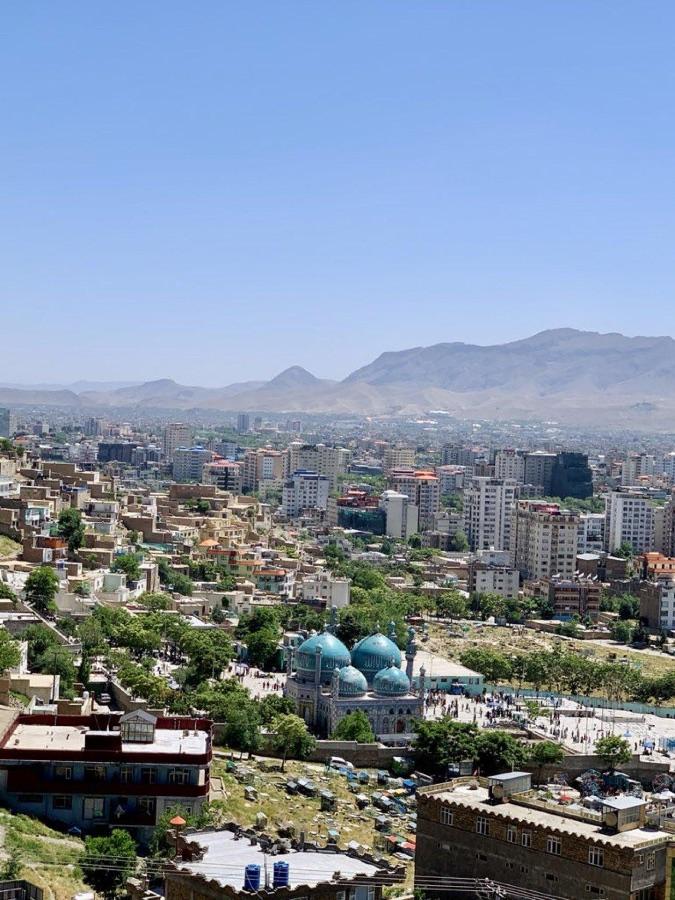
Some cities are known for their skylines. Kabul is known for the way people speak about it. For three and a half thousand years, travellers, emperors and exiles have arrived in this bowl of mountains 1,800 metres above the sea and left writing something close to a love letter.
A poet’s confession
The phrase itself comes from Saib Tabrizi, a seventeenth-century Persian poet who passed through Kabul on his way to the Mughal court. His famous ode imagines the city as a beloved woman: dressed in a rough mountain skirt, her rooftops crowded with moons, a thousand splendid suns hidden behind her walls. He admits the city’s blowing dust stings his eyes — then says he loves her anyway, because both knowledge and love come from that dust [1]. Three centuries later Khaled Hosseini took a line from that poem for the title of A Thousand Splendid Suns [2].
Saib was not the first. The emperor Babur, who took Kabul in 1504 and made it his first capital, said it was the city’s climate and its fruit that won him over. He asked to be buried there under an open sky, and he was — on a terraced hillside above the town [3].
Three millennia of arrivals
A settlement here appears in the Rigveda around 1500 BCE as Kubhā, and Ptolemy noted a city called Kabura in the second century CE [3][4]. Sitting where routes from India, Persia and Central Asia meet, Kabul became one of the great hinges of the Silk Road [4]. Greeks, Kushans, Buddhists, Samanids, Timurids and Mongols all passed through; Genghis Khan’s forces sacked it in 1221, and it became a capital again under Timur Shah in the eighteenth century, whose restored mausoleum still stands by the river [3].
Love in ordinary days
Ask Kabulis what they love and the answers are small and specific: a Friday picnic at Qargha Lake, kebab smoke in a crowded lane, the book stalls of Mandawi bazaar, carpets and lapis on Chicken Street, mantu at someone’s mother’s house, Nowruz in March.
And there is Bagh-e Babur. The Mughal garden where the emperor lies buried became a public park in the 1930s, was wrecked in the fighting of 1992–93 — most of its trees cut for firewood — and reopened in 2002, when the Aga Khan Trust for Culture began restoring it. Archaeologists found the line of the old marble channel, and water runs down the central axis again as it did in Babur’s day [5][6]. Restoring a garden is not the most urgent thing a city can do. That is the point.
A difficult beloved
The last fifty years cannot be edited out. Kabul’s population has grown from roughly two million in 2000 to over six million, far outpacing its infrastructure [7]. Its aquifers have dropped 25–30 metres in a decade, about half the city’s boreholes have run dry, and aid agencies warn Kabul could become the first modern capital to run out of water [7]. Its people live under severe constraints, women and girls most of all.
None of this cancels the love; it explains its intensity. The Kabul of Saib’s poem was never a city without dust. It was a city loved through the dust — and Afghans scattered across the world still argue about whose neighbourhood makes the best bolani, and still hope to end up within sight of those mountains.
Rivers keep their names for three thousand years for a reason. Somebody, in every generation, cares enough to keep saying it.
 Dari and Pashto: What's the Difference?
 Nowruz in Afghanistan: Traditions of the Afghan New Year
 Mantu and Ashak: Afghan Dumplings Explained
 Kabuli Pulao: How to Make Afghanistan's National Dish